
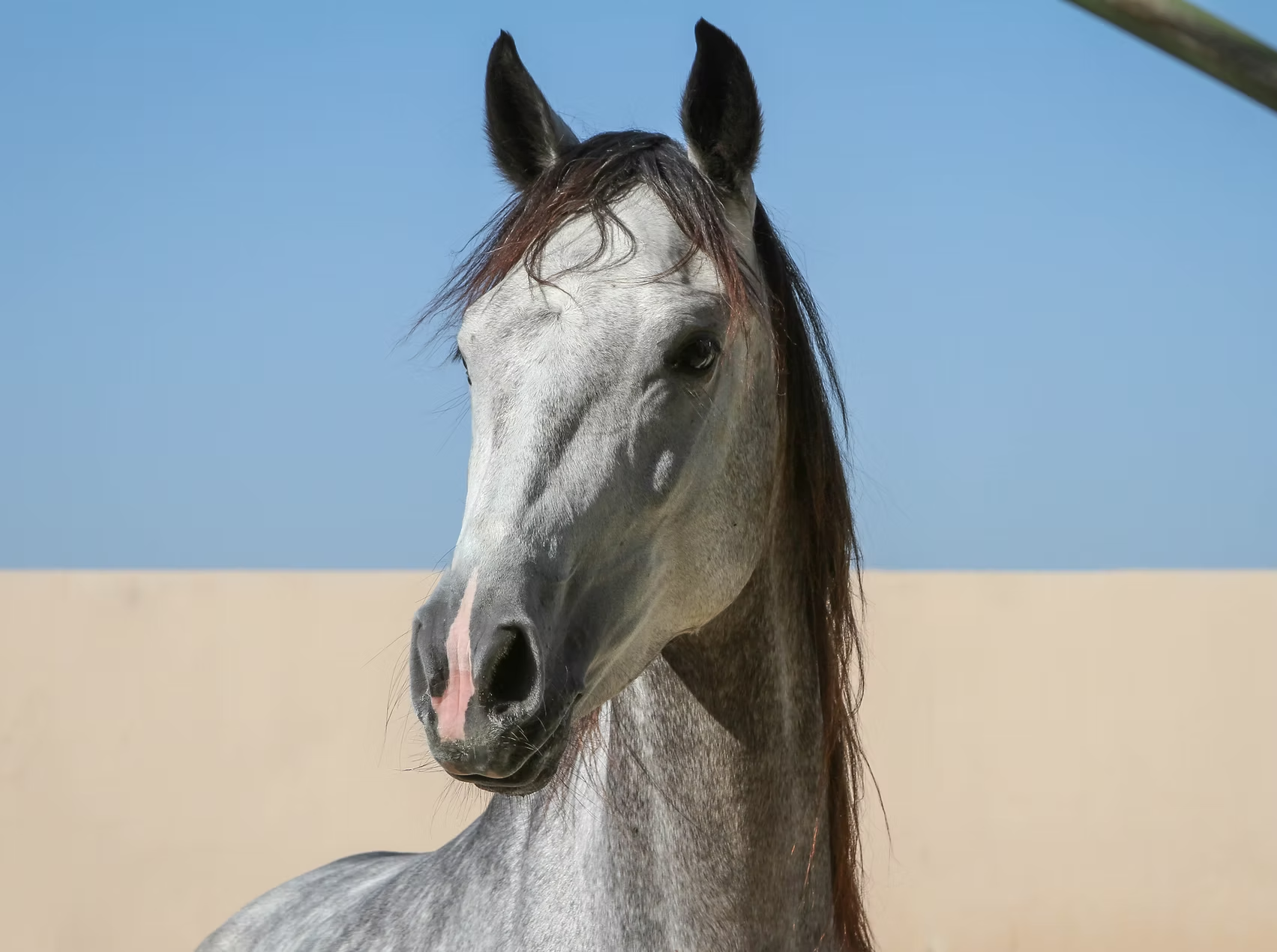
"The wind of heaven is that which blows between a horse's ears."
Al Haddar Stud
Preserving the Legacy of Desert Bred Arabians
Discover Our HeritageThe Desert-Bred Arabian
A Legacy of Purpose
The history of the desert-bred Arabian horse is not simply the history of a breed. It is the history of survival, loyalty, endurance, and partnership between horse and man. For thousands of years, these horses were shaped by the Arabian desert, by the Bedouin who depended on them, and by the harsh conditions that allowed only the strongest, soundest, and most intelligent horses to remain.
The true desert Arabian was never bred for decoration alone. It was bred for purpose. It carried its rider across great distances, through intense heat, over difficult ground, and into war. It needed to be strong enough to endure hardship, sensible enough to remain calm in difficult situations, and loyal enough to stay with its rider no matter the circumstances. Today, modern knowledge, veterinary care, nutrition, and breeding methods can help preserve and improve these horses, but only when they remain true to the qualities that made them great in the first place.
The beauty of the desert-bred Arabian has always come from its function. Its large, dark eyes are alert, intelligent, and expressive. Its head is refined without becoming exaggerated, with a broad forehead, open nostrils, and a strong muzzle that allows the horse to breathe freely under effort. A true desert Arabian should never have an overly narrow or restricted muzzle, as the horse was always meant to travel long distances, work in heat, and recover quickly after exertion. Large nostrils and a well-formed head are not simply beautiful features — they are essential for airflow, endurance, and soundness. Small, round nostrils are considered a fault in traditional Arabian type.
Its neck is clean and well-shaped, its shoulder laid back, and its body compact with a short back and strong hindquarters. Despite its elegance, the desert Arabian is not fragile. It is known for dense bone, strong feet, sound legs, deep ribs, and a body built to carry weight over long distances with efficiency and stamina. The horse was meant to be athletic, balanced, and durable, not simply refined in appearance.
A true desert Arabian should not be changed simply to suit trends in the show ring. Excessive refinement, extremely dished faces, weak bone, tiny muzzles, or movement bred only for appearance move away from what these horses were always meant to be. Some modern horses look nothing like the desert Arabians that built the reputation of the breed. They may have overly exaggerated heads, restricted breathing, weak bodies, or temperaments that are too nervous, reactive, or difficult. In some cases, selective breeding for appearance has created horses that are beautiful in photographs but lack the soundness, athleticism, and practical usefulness that once defined the Arabian horse. Veterinarians and breeders have raised concerns that extremely concave heads and reduced muzzle size may affect airflow, sinus drainage, dental health, and overall function.
Temperament has always been one of the breed's most important qualities. Arabian horses lived closely with their owners, often near family tents, around children, and in demanding conditions. A horse that was difficult, unpredictable, or aggressive could not be trusted in battle or on long journeys. For this reason, desert Arabians became known for being calm under pressure, sensible in dangerous situations, and deeply loyal to their people. They are intelligent, sensitive, and aware, but they are also expected to remain steady in heat, fatigue, noise, and stress. A true desert-bred Arabian should have presence and spirit, but never instability or unnecessary nervousness.
To preserve the desert-bred Arabian is not simply to preserve a bloodline. It is to preserve the original purpose, structure, soundness, and character of one of the world's greatest horses — a horse that has remained admired for centuries not because it changed with fashion, but because it stayed true to what it was always meant to be.
Get In Touch
We welcome inquiries about our horses, breeding program, and the legacy of desert-bred Arabians.
Contact Us